


FUTURISTIC PROTOTYPE CANYON PREDICT BIKE MAKES DEBUT AT EUROBIKE TO DEFINE THE FUTURE OF RIDER SAFETY
A bold step towards safer road cycling. Featuring integrated Edge AI, radar, cameras and an in-handlebar display, could this cutting-edge bike and helmet system revolutionise cycling safety and performance riding in the future?
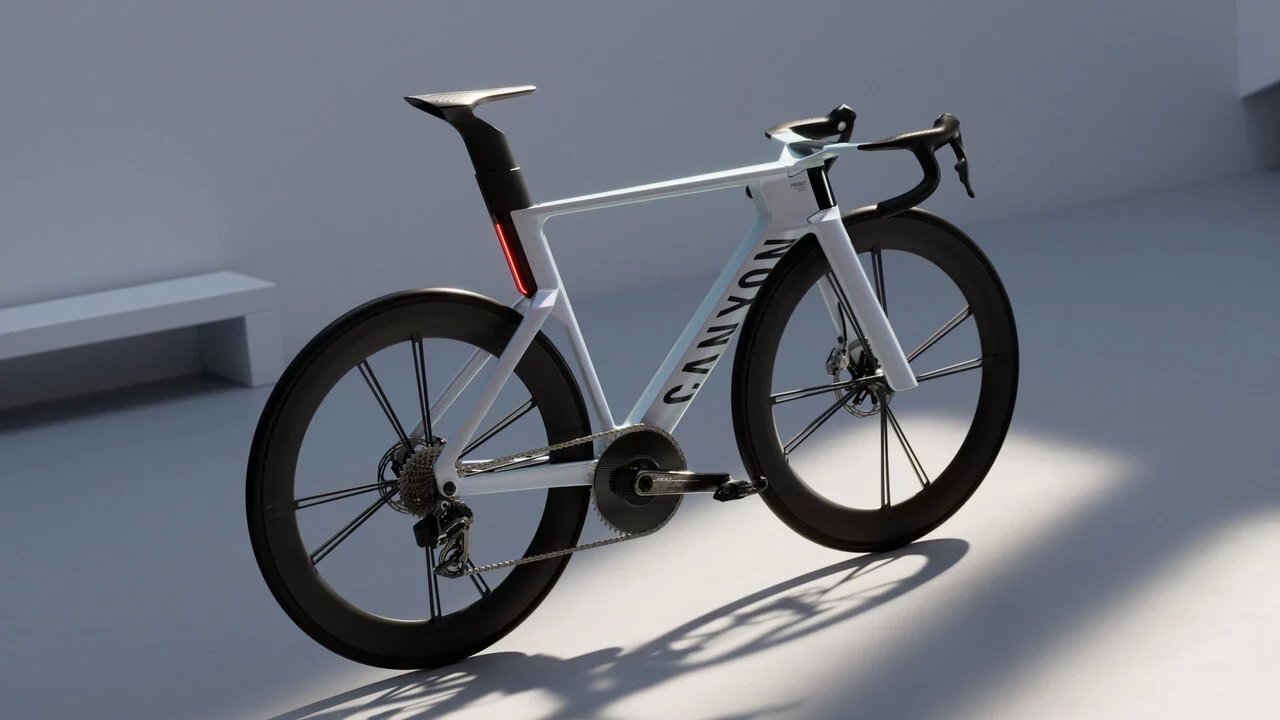
Embargoed until 16:00 CEST, Thursday 18 June 2026: Making its highly-awaited debut at Eurobike next week will be a futuristic prototype Canyon Predict bike, a cutting-edge concept designed to radically improve rider safety and pack-riding performance.
This breakthrough intelligent system architecture for road bikes is designed to see what you don’t see. Rather than relying on traditional, reactive safety measures, Canyon’s Predict system uses a 360-degree sensor array to anticipate road hazards, anticipating other road users, tracking group-ride dynamics, advising on cornering speeds and predicting tricky surface conditions before the rider even notices them.
As well as the technology being neatly packaged into a premium road bike with a data screen integrated cleanly into the handlebar, the Canyon Predict bike has the ability to connect to Canyon’s augmented-reality Stingr Smart helmet with its drop-down visor and data visualisation screen.
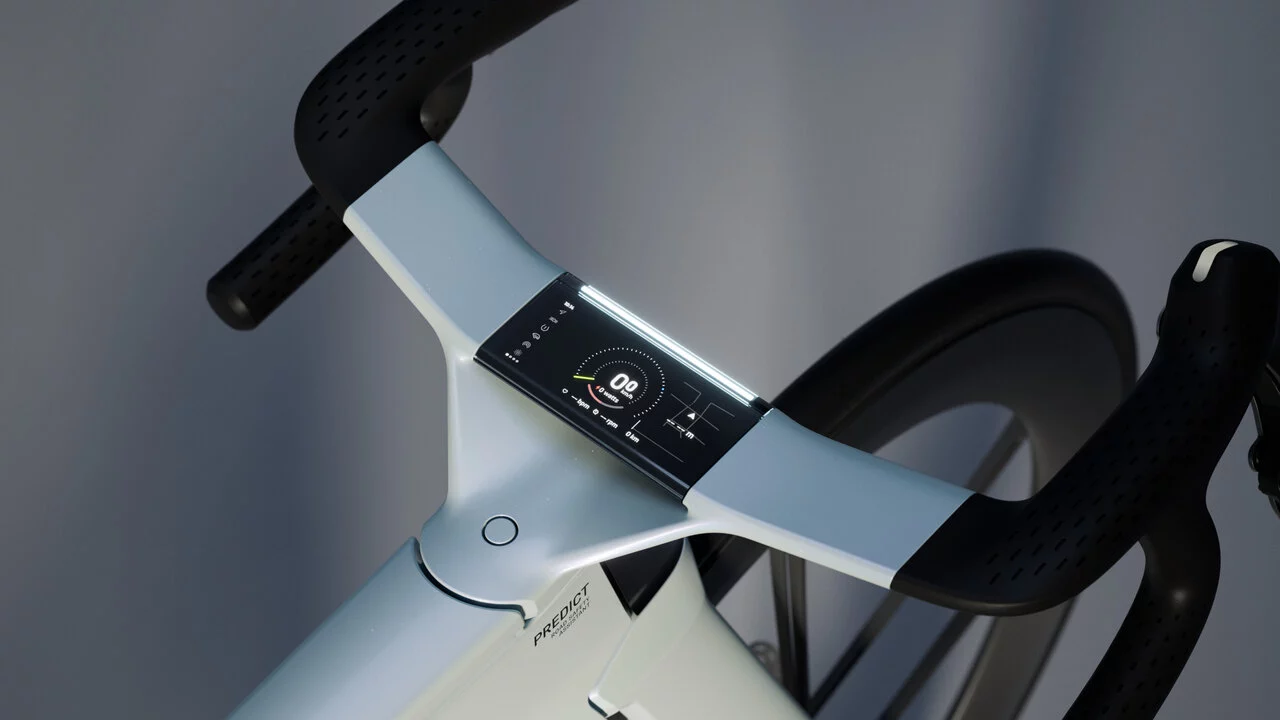
Together, these prototype innovations reinforce Canyon’s long-term commitment to performance, safety and digital integration. Moreover, at Eurobike, taking place in Frankfurt between June 24-27, Canyon will explain how and when these cutting-edge innovations can soon become commonplace on our streets.
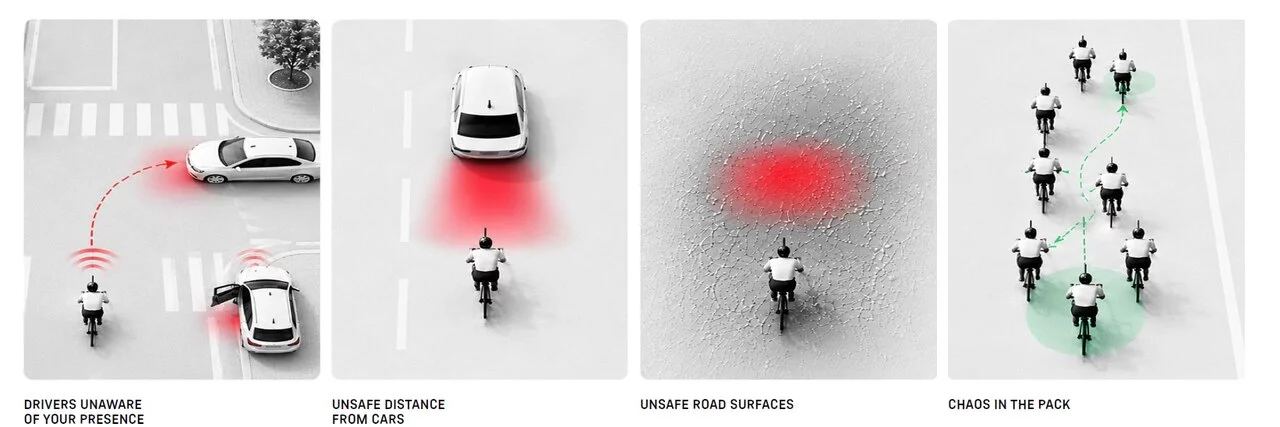
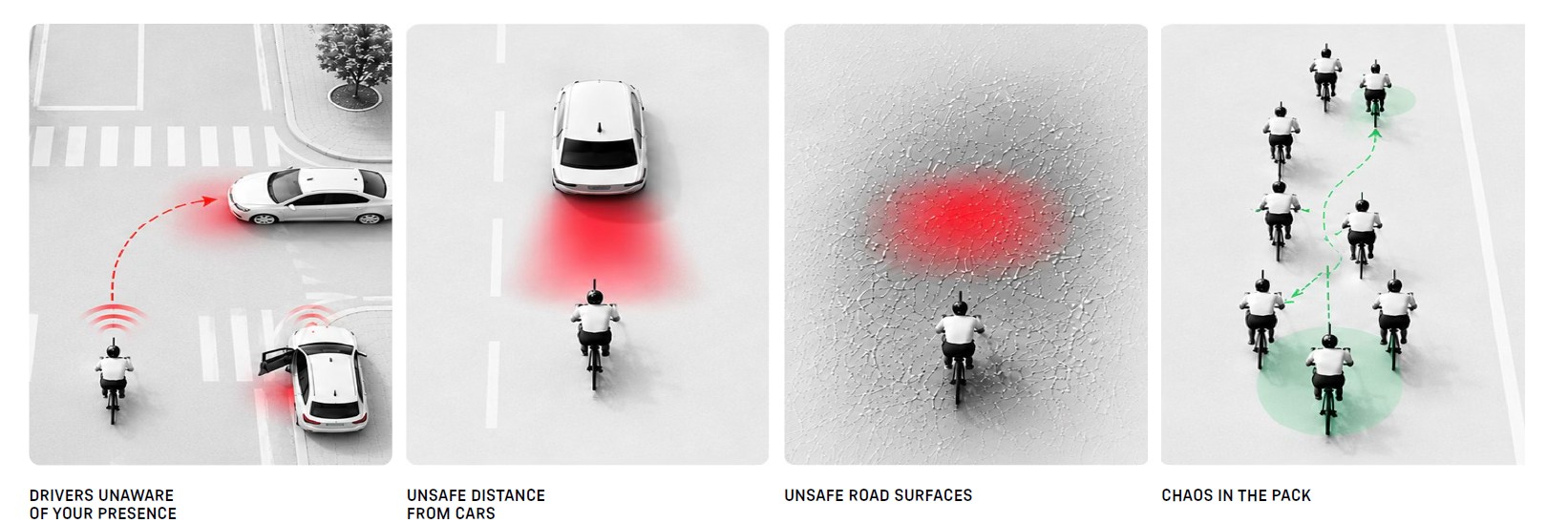
While safety tech in the automotive world has skyrocketed, cycling safety has lagged behind. From drivers unaware of cyclists and riders riding an unsafe distance from vehicles in front, to unsafe road surfaces and chaos in the pack, it doesn’t take much to have an accident.
But what if your bike could analyse and predict all the risks around you, and inform you about those risks before you’ve had chance to think about them? Or what if your bike could help you find your perfect place in the pack at all times and at all speeds?
Canyon’s new system aims to bridge that gap without ruining the pure cycling feel of a high-performance road bike. This campaign video explains more:
“We considered the numbers of people killed or seriously injured while riding, or the numbers who simply don’t cycle because they don’t feel safe, and we asked ourselves what we could do to address this problem, said Canyon’s head of design Fedja Delic.
“Cars have become inherently safer and motorist deaths over the last ten years have fallen but bicycles have not seen any significant safety improvements. In fact the proportionate and absolute number of cyclists killed or seriously injured is shown to be rising in many countries. While technology has made driving a car safer than ever before, riding a bike on the road has arguably become more dangerous than ever before. Yet with the technology available, significant bicycle safety improvements are more than possible.”
Based on a communication system between a Canyon performance road bike and its on-board computer, this system uses the latest technological advances in cameras, radar signals and Edge AI to improve both your riding experience and your safety – meaning less distractions, less multitasking, and more pure cycling.
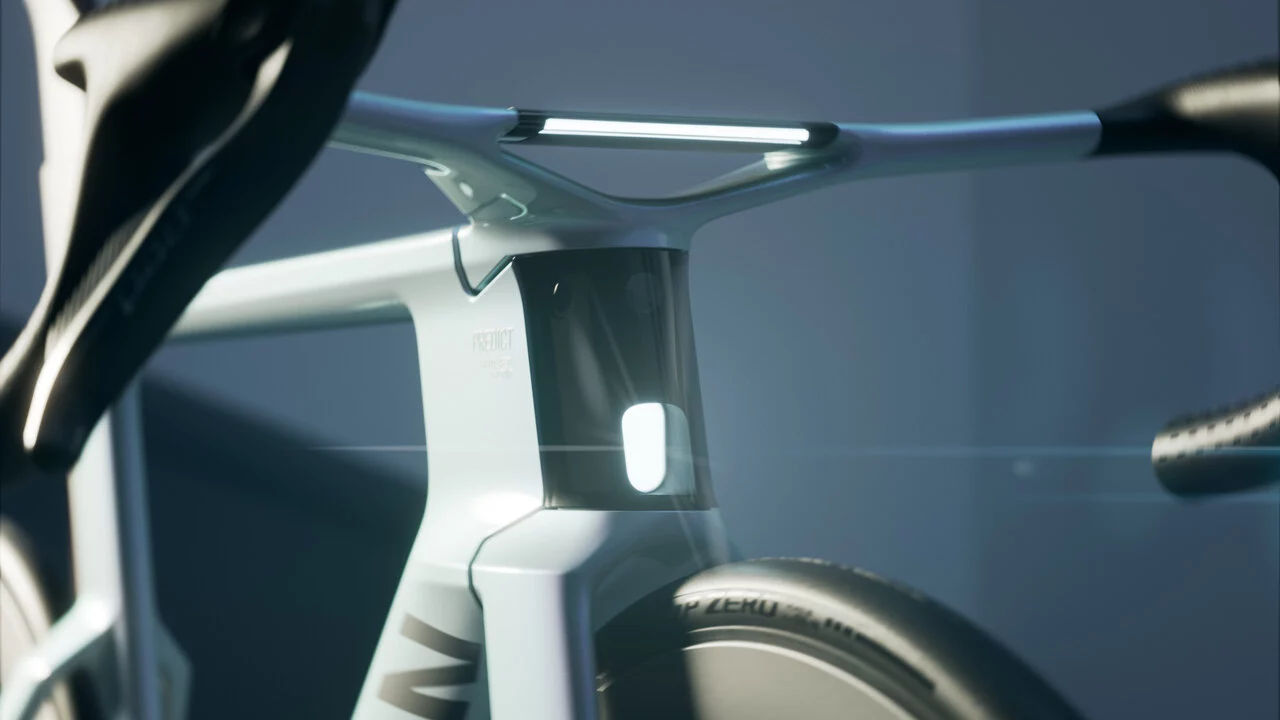
This intelligent safety system transforms bicycle safety from reactive to predictive by continuously perceiving the environment, understanding context and anticipating hazards in real time.
Through the fusion of data from various on-bike sensors and integration of rider dynamics such as speed, steering, and stability, the system builds a situational model that goes beyond surrounding traffic.
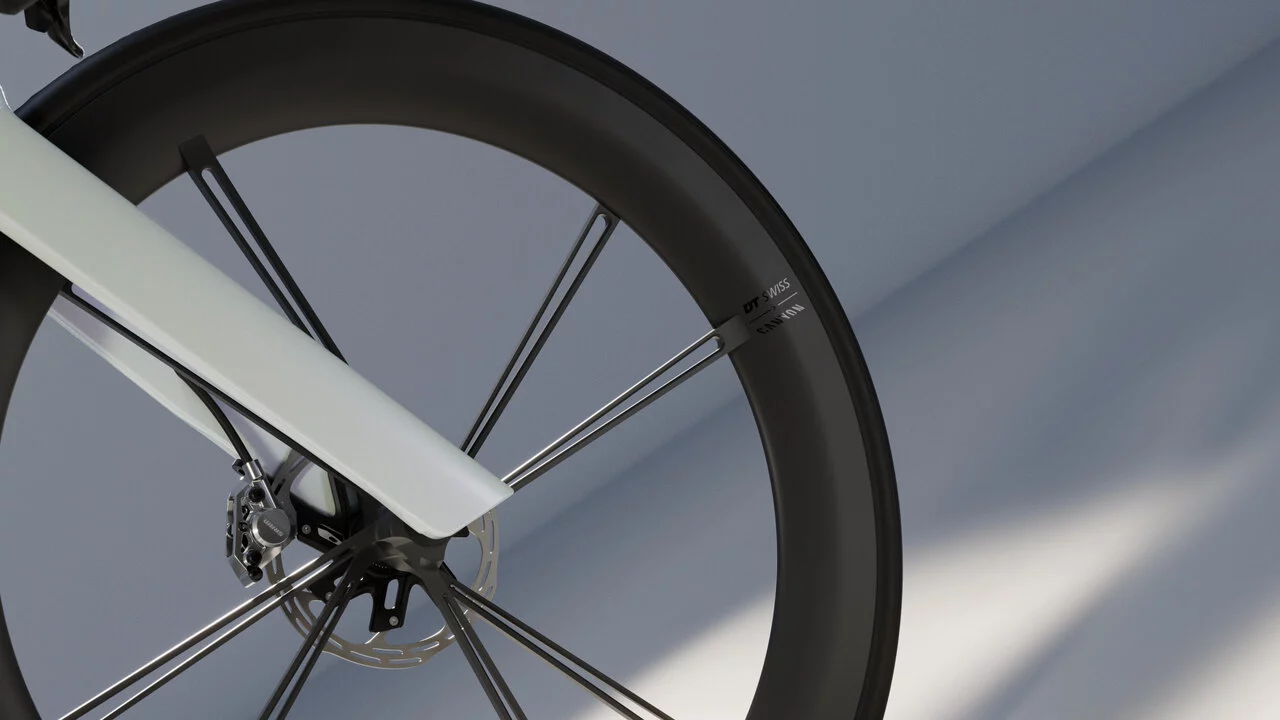
It combines 360° multi-modal sensing (camera + radar + distributed sensors including a multi-dimensional motion sensor in the DT Swiss wheel hub) with on-device AI processing to eliminate blind spots and remove internet dependency, enabling instant, privacy-preserving decision-making.
It predicts future trajectories of both the rider and nearby objects, before assigning risk scores, and communicating them through intuitive feedback including directional lights, haptics, and display guidance.
On-board, digital data displays or visual cues include critical warnings about your bike and its surroundings, such as prediction, distance, terrain and group-ride assistance, as well as the potential for community or “swarm” intelligence when multiple users are riding together.
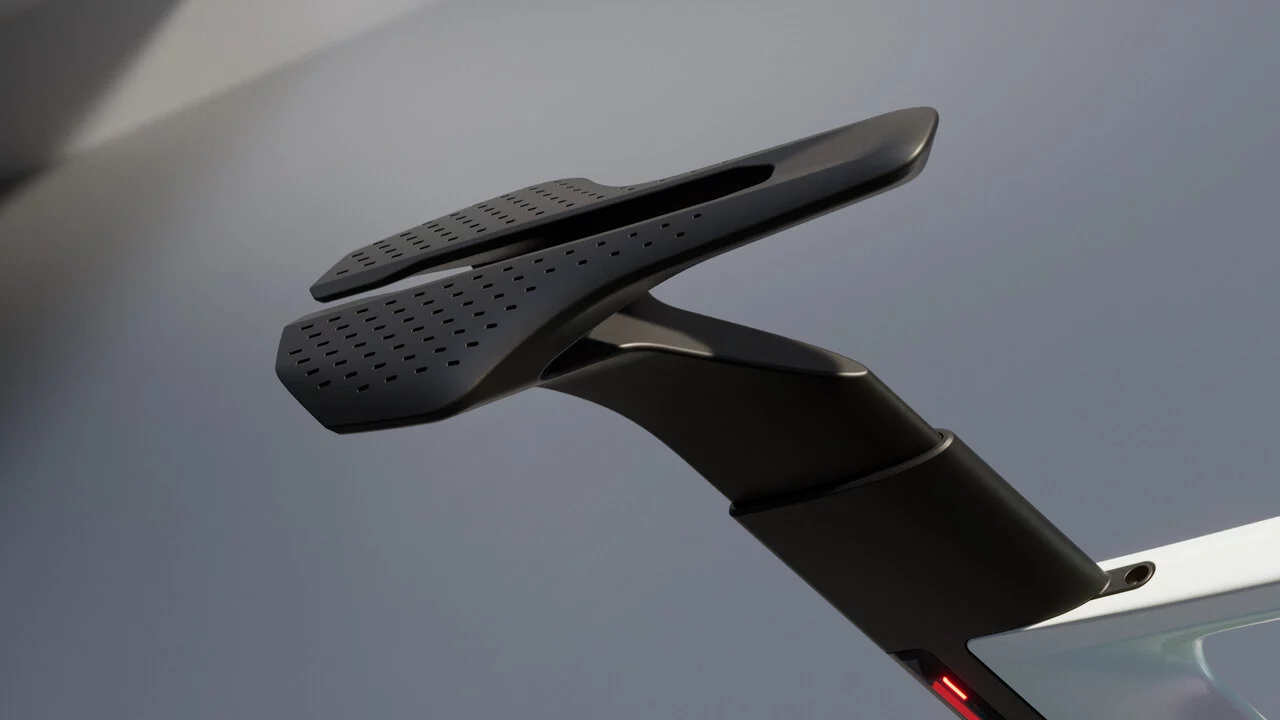
In critical situations, the rider can intervene through more than just slamming on the brakes. Adaptive hardware such as allowing the rider to remotely drop the seatpost can lower the rider’s centre of gravity, improve their stability, and ultimately increase their control before a crash can happen.




And rather than relying on cloud computing – which introduces latency and privacy risks – the platform processes data entirely on the bike via Edge AI.
Tour de France Femmes winner, CANYON//SRAM Racing's Kasia Niewiadoma-Phinney: “I train and race on the road a lot, and there are plenty of times where data about my bike and any other safety measures about other road users would be welcome. Improving how safe you feel on the road and helping you react to changing circumstances benefits everyone. With this sort of new technology, it makes me eager to see where it can go in reality and what the next generation of bikes can deliver to the rider.”
The overall goal of the system is to transform bicycle safety from reactive to predictive by enhancing the rider’s awareness of the complete environment, significantly reducing reaction time to potential hazards, and providing intelligent, context-aware insights rather than simple alerts.
By integrating real-time perception with rider dynamics such as speed, steering angle, and stability, the system also aims to improve control in critical situations, while ultimately minimizing both the likelihood and severity of accidents through timely guidance and interventions.
Canyon’s Mazen Jrab, IoT Hardware Lead: “Road cycling needs a safety revolution. With Canyon Predict we are transforming safety from being reactive to predictive.”
To see the Canyon Predict technology in action, as well as several other innovative prototype concepts, visit the Canyon exhibition stand at Eurobike in Messe Frankfurt (hall 11.0, stand B50) between 24-27 June.
1. Additional images: see here.
To discover more about the Canyon Predict bike and Stingr Smart helmet and for a longer interview with Canyon’s Head of Design, Fedja Delic, take a look at the press kits here:
Multiple studies, representing public sentiment across Europe and North America, clearly indicate that safety concerns are one of the leading barriers that prevent people from cycling – whether that’s commuting by bike or cycling for sport.
- In the UK’s National Travel Attitudes Study (NTAS) Wave 9 (2023), 48% of respondents said safety concerns were the main reason they never ride a bicycle (source: GOV.UK.).
- In Germany’s 2025 Cycling Monitor, 41% of adults and young people said they did not feel safe in road traffic, with the main reasons being drivers’ lack of consideration, traffic pressure, and high motor vehicle speeds (source: www.bmv.de).
- Within the United States, fewer than 1% of trips are made by bicycle – with fear for personal safety being the primary reason residents in the USA choose cars over bikes.
Perhaps more shocking than that though is the number of riders killed or seriously injured each year:
- Over the past decade, the number of cyclists killed in road accidents in Germany has increased by 20%, whereas the number of car occupants killed has fallen by 35% (source: Statistisches Bundesamt).
- According to the German Federal Statistical Office (Destatis), one in six (16.4%) people killed in German road traffic in 2025 was a cyclist. Compared to 2015, the increase is 20.6%.
- The European Traffic Safety Council reported that 1,926 cyclists were killed on EU roads in 2024. Cyclists now account for 10% of all road deaths in the EU. Police-reported serious injuries among cyclists increased by 12% between 2014-2024 and 65% of cyclist deaths in the EU result from collisions with motor vehicles.
4. For more on product and design innovation at Canyon, see here: Innovation at Canyon