How Canyon’s Inflite won more races in the past eight years than any other bike – regardless of discipline.
jpeg
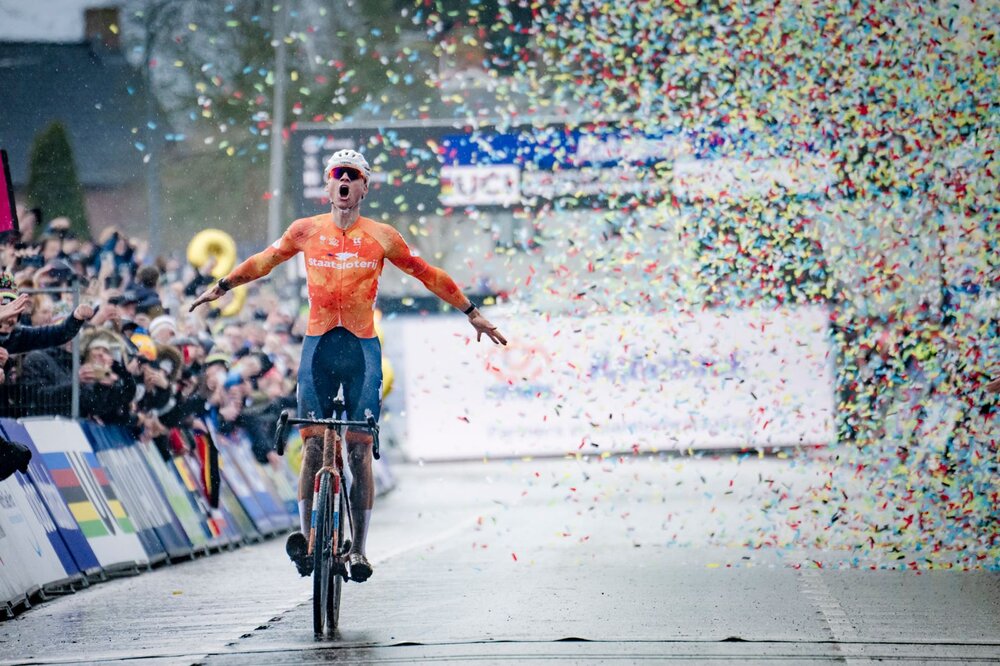
Monday 2 February 2026: There are very few bicycles in modern cycling that force a rethink of how success is even measured. Canyon’s Inflite is one of them. At last weekend’s UCI Cyclocross World Championships in Hulst, The Netherlands, the Inflite extended a record that now reaches beyond its discipline.
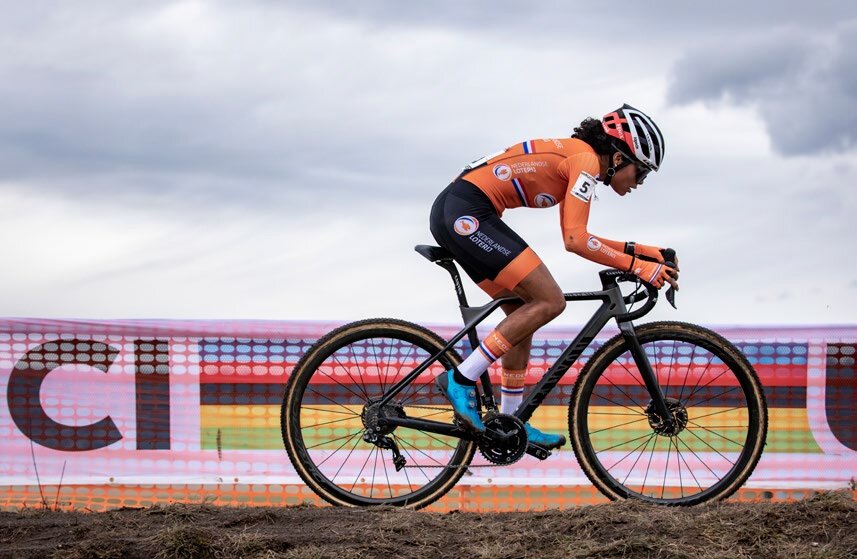
Measured by total UCI race wins over the past eight years on a single, continuous bike generation, no other race bike — whether from road, mountain bike or gravel — has accumulated comparable results. In numbers that reads (Elite Men/Women, U23) 14 UCI World Championship titles and more than 60 individual World Cup race wins.
But this is not a story about a few seasons or a single rider, but about longevity on one platform.
jpg
In an era defined by rapid product cycles and frequent frame resets, the Inflite has remained fundamentally the same race bike — refined with new specs, but the frame has always been the same. The most obvious explanation is rider dominance. Mathieu van der Poel’s influence on those numbers is undeniable. Few athletes in cycling history have combined raw power, technical skill, and consistency in the way he has, and any honest assessment of the Inflite’s success must start there.
Love at first ride
When Canyon reached out for the first time to a boyish Mathieu in 2017, he was already a successful cyclocross racer. Back then no one could know that he would become the force he is today in road, MTB, gravel — and cyclocross.
jpg
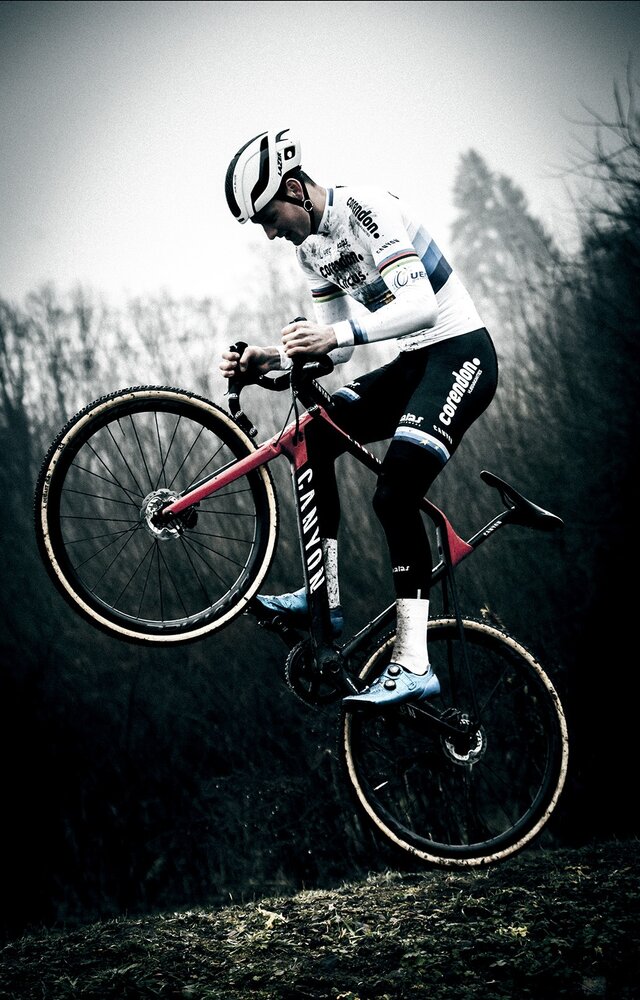
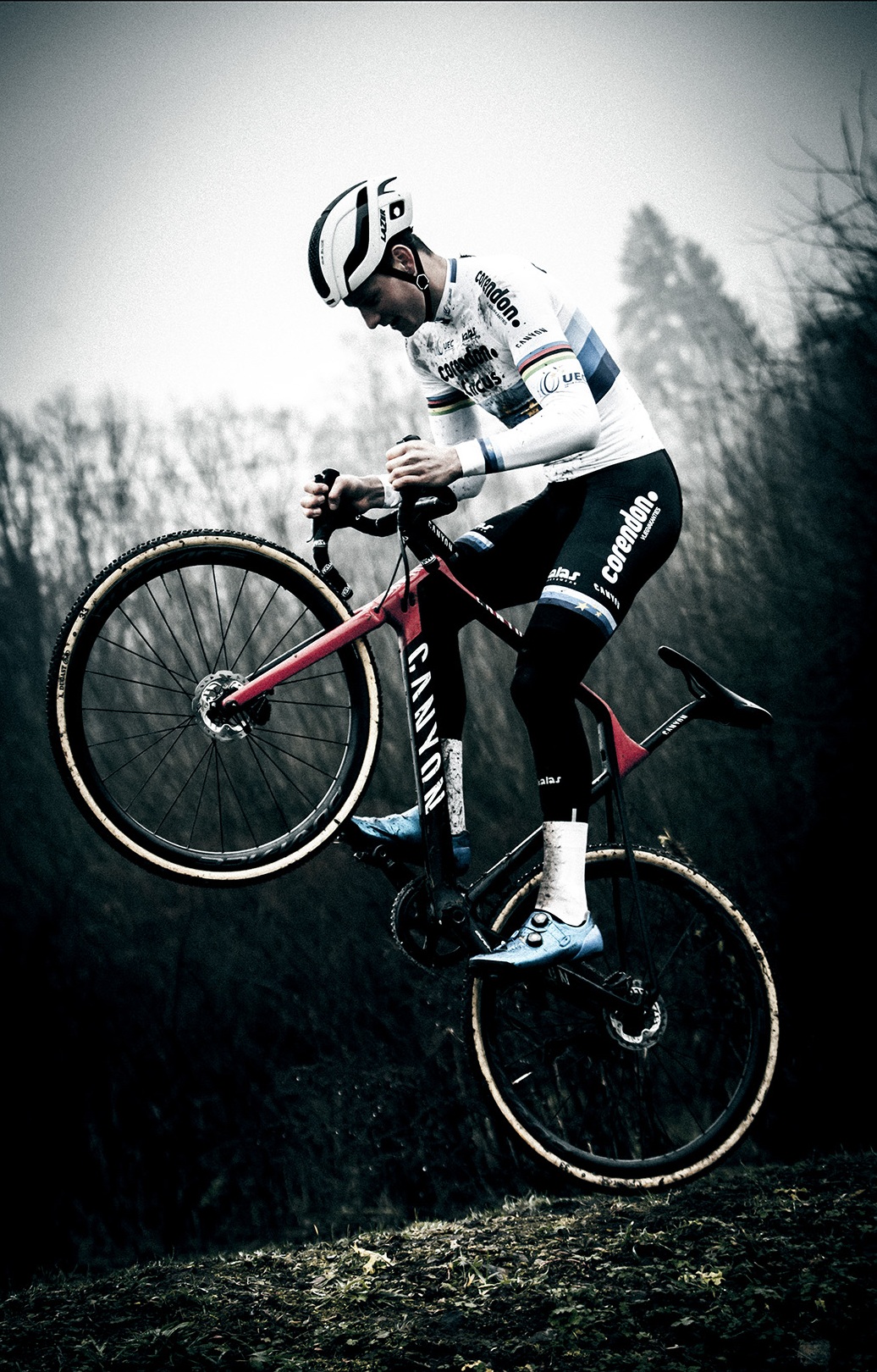
Julian Biefang, Canyon’s cyclocross product manager at the time, remembers: “We pulled the bike out of our van at Mathieu’s home. He immediately grabbed it, and the first thing he did was wheelie out of the garage and hop over a two-foot-high log in his garden.”
jpg
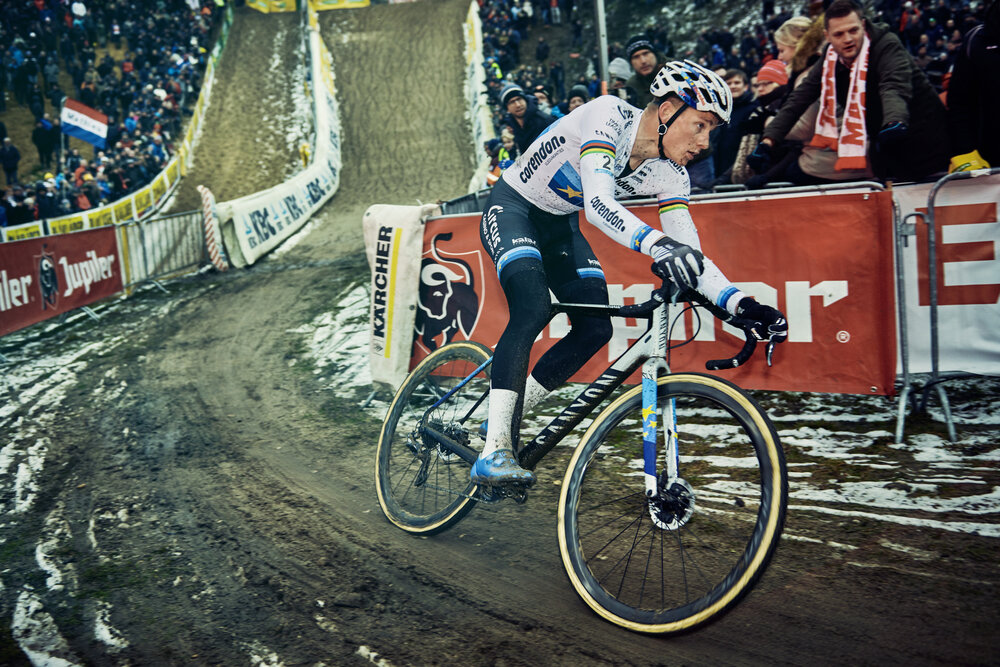
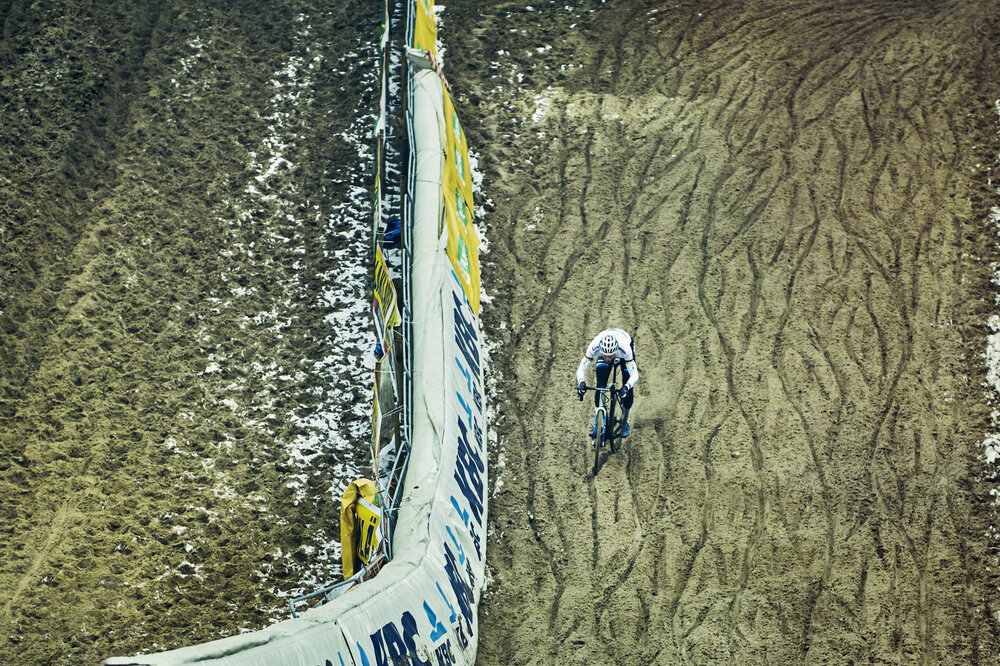
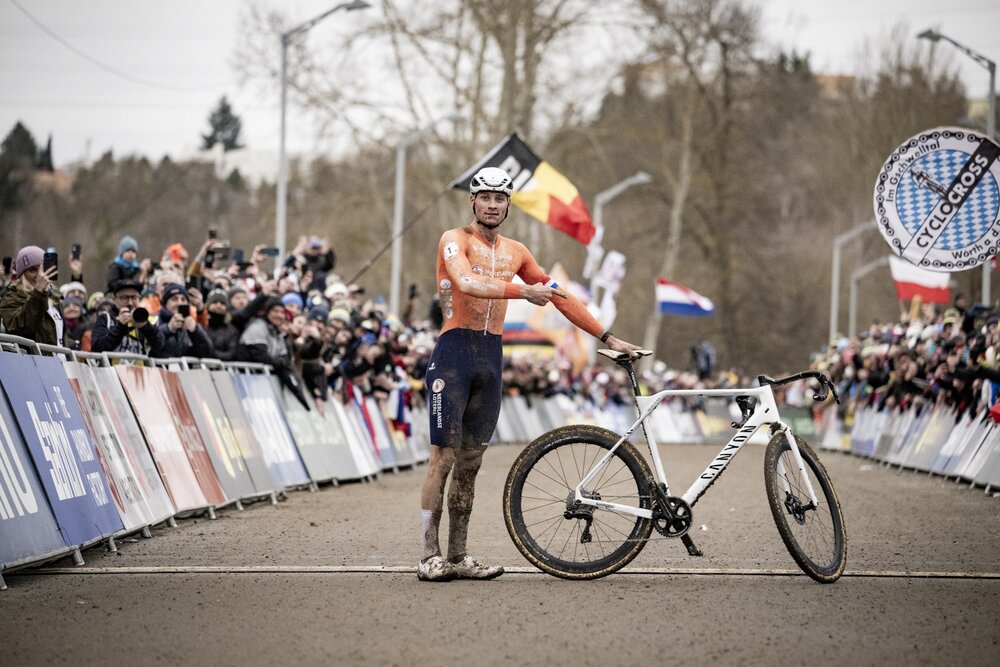
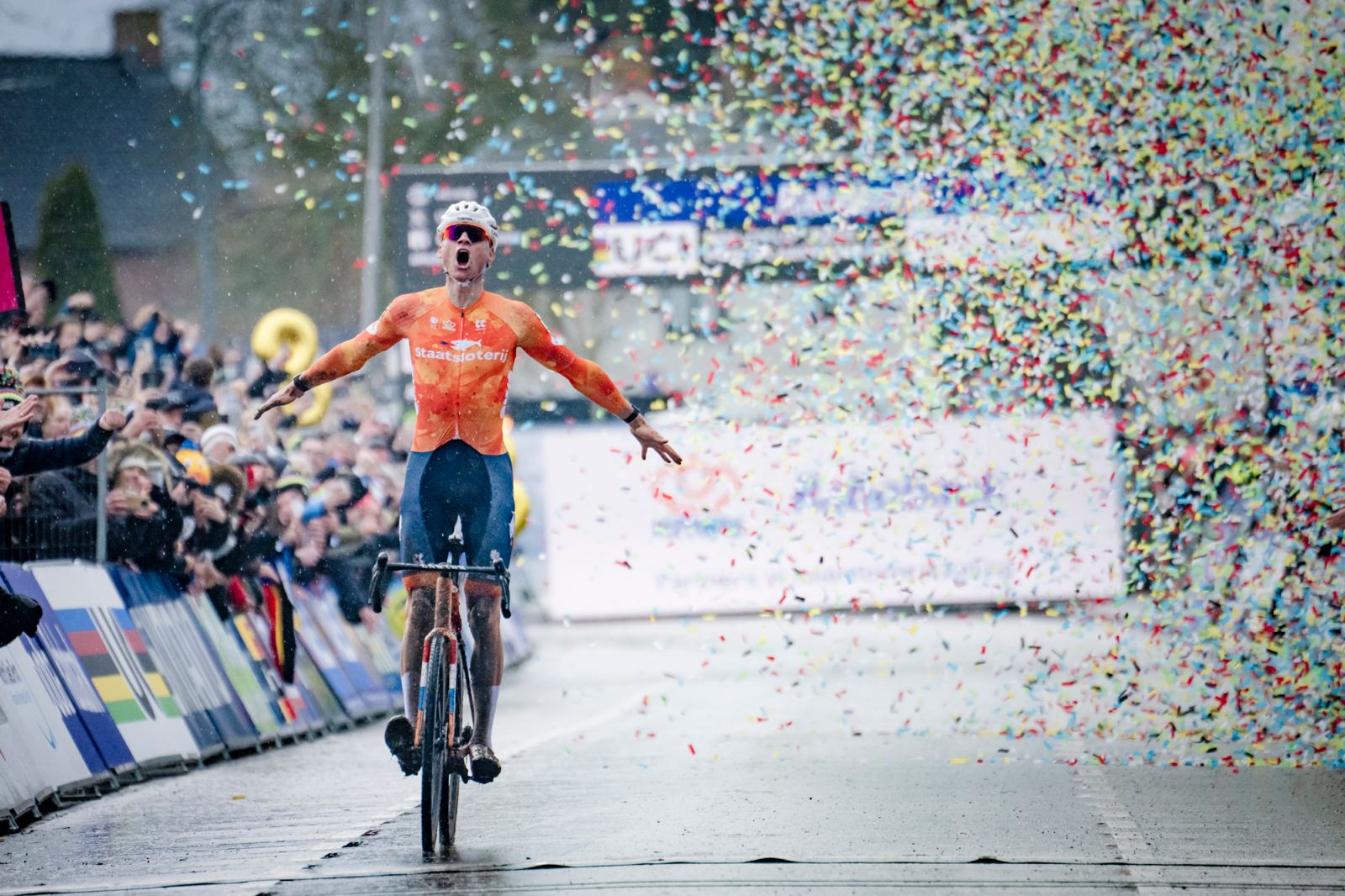
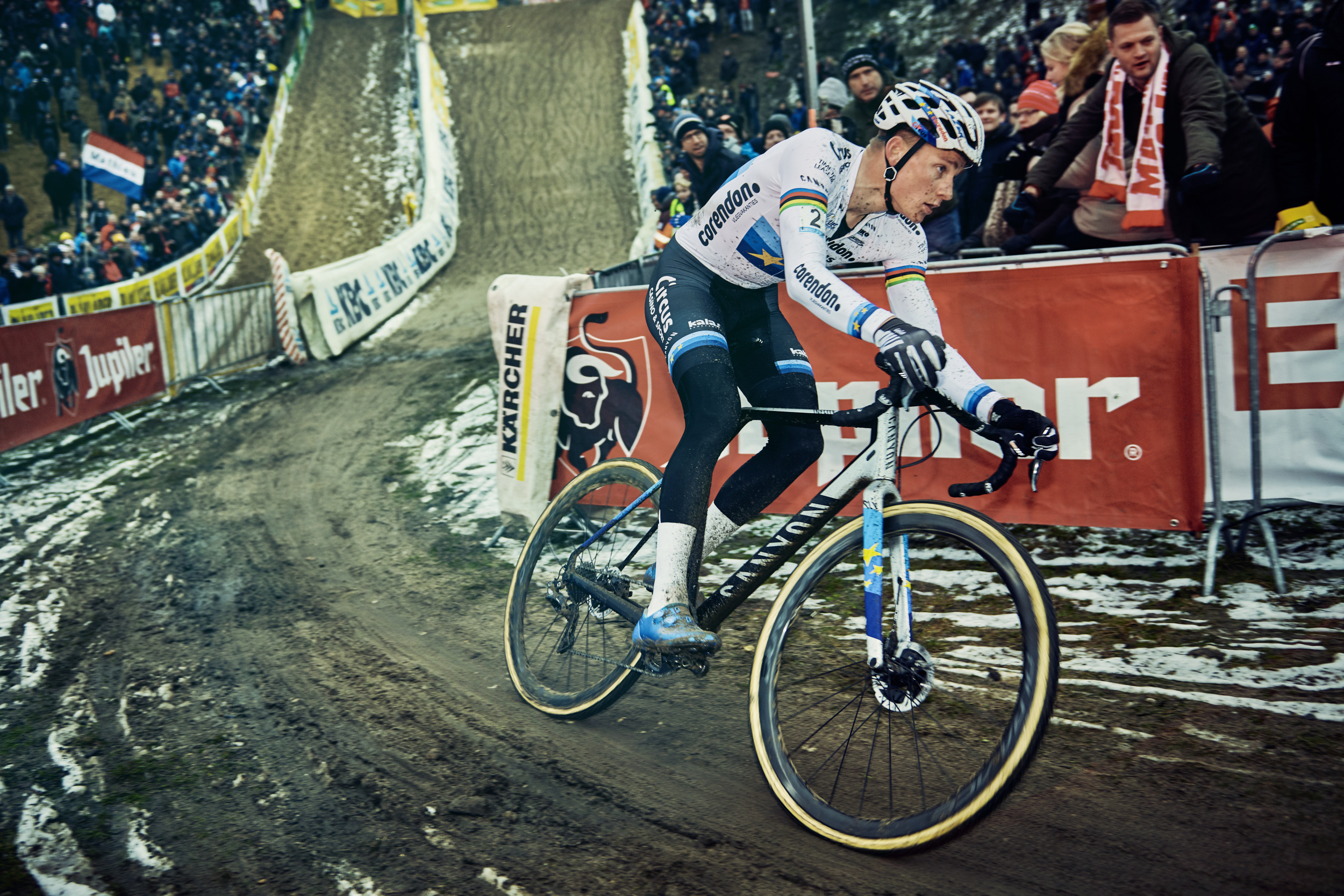
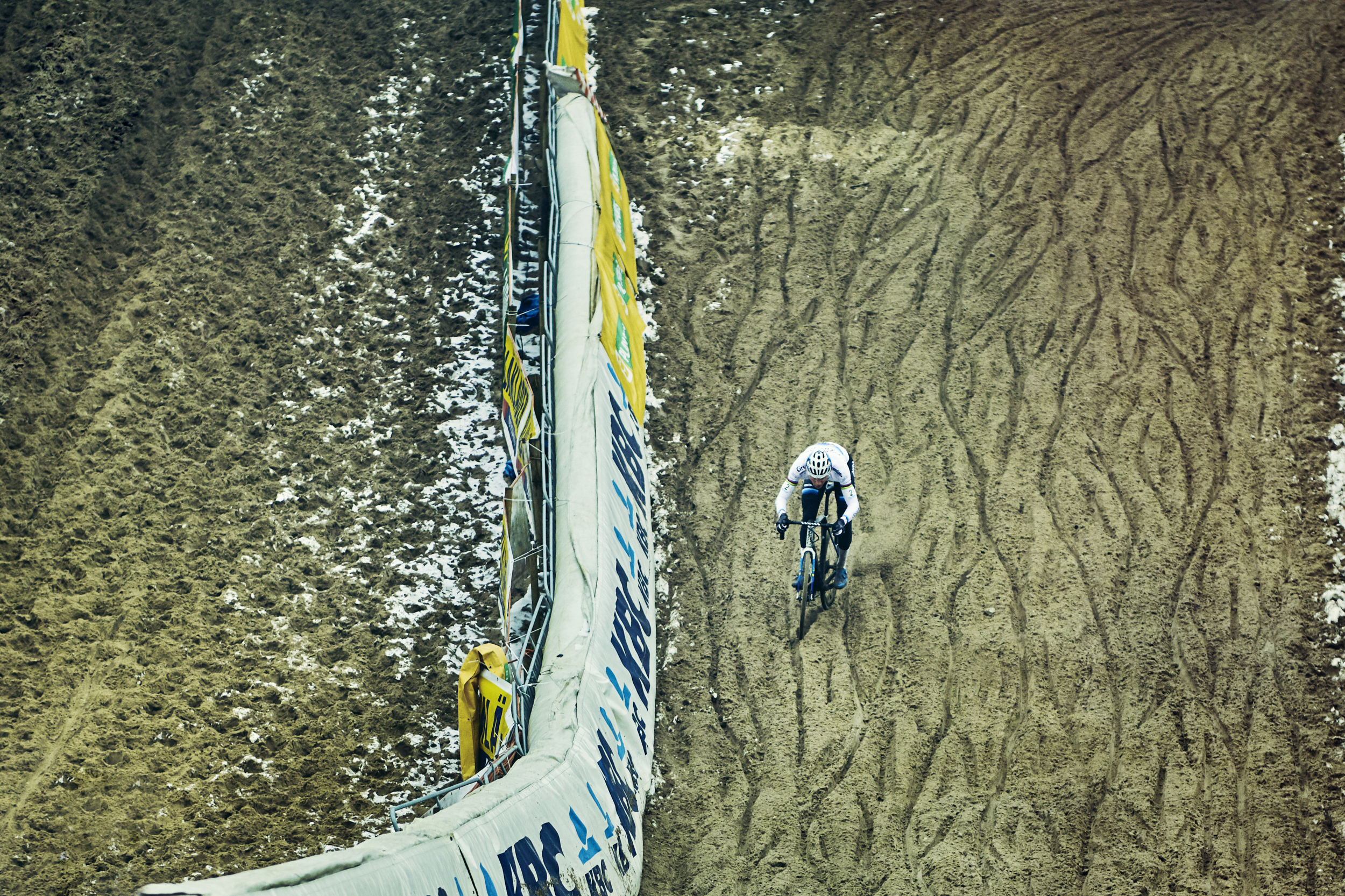
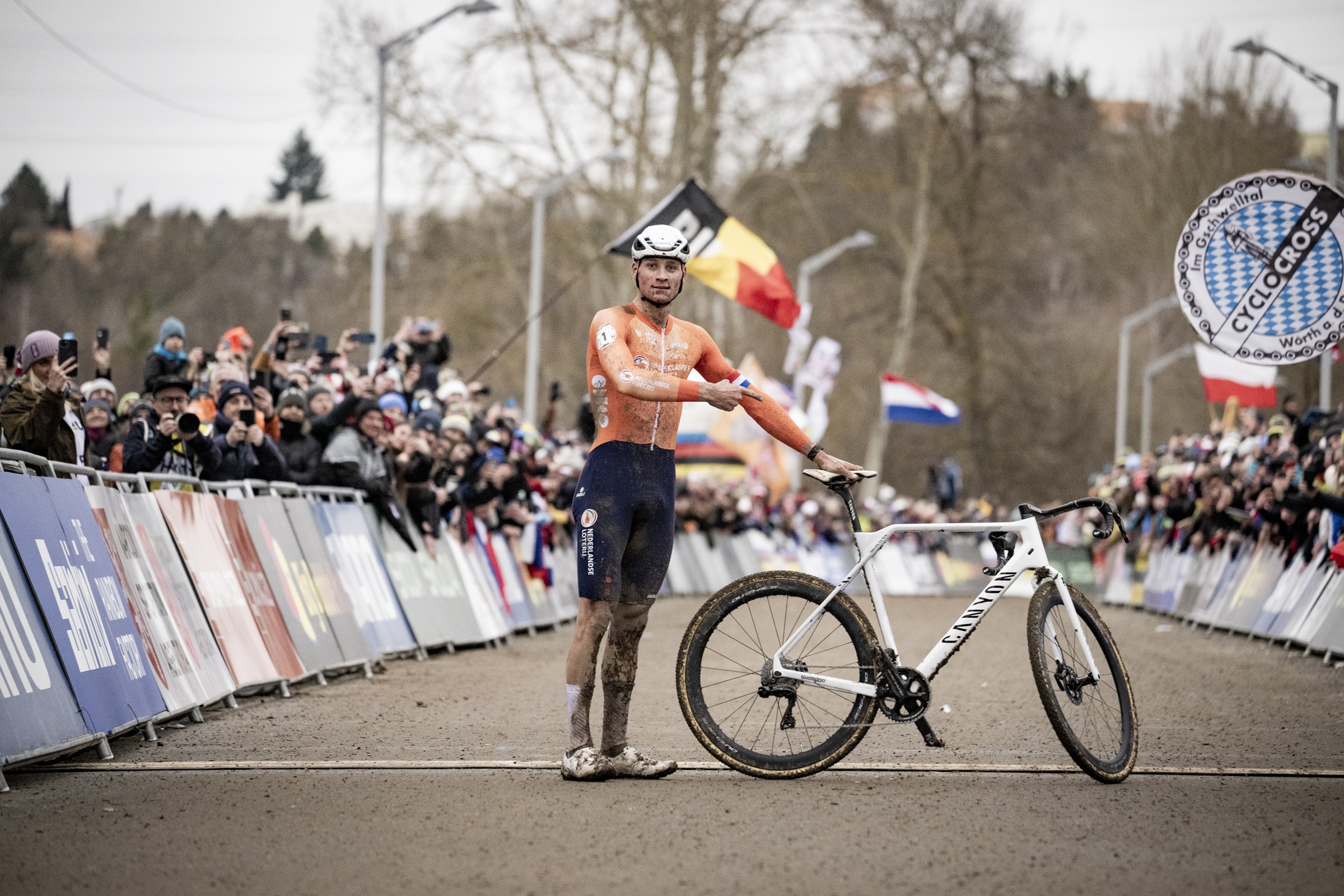
On New Year’s Day 2018, Mathieu debuted on the Inflite in Baal, Belgium. He won, covered in sludge — almost unrecognizable — with his now globally recognized style: finishing solo. Just like this Sunday in Hulst, Netherlands, where he broke away on lap 2 and never looked back, riding a lonely but triumphant race to claim his historic eighth world title.
But rider dominance alone does not explain why the wins kept accumulating on the same bike.
It’s always the same bike
The platform — the frame — simply never changed. And Canyon’s founder Roman Arnold is usually not known for settling on success: “Our engineering mindset is very German: we are always our fiercest critics, questioning the status quo.” With the Inflite, the mindset wasn’t much different.
But in times when technology cycles spin faster than Mathieu’s teammate Jasper Philipsen’s legs, and today’s hype is tomorrow’s outdated product, the Inflite has stayed the Inflite 1.0. For eight years and counting. So, what was different?
The kink – built for the discipline, not the market
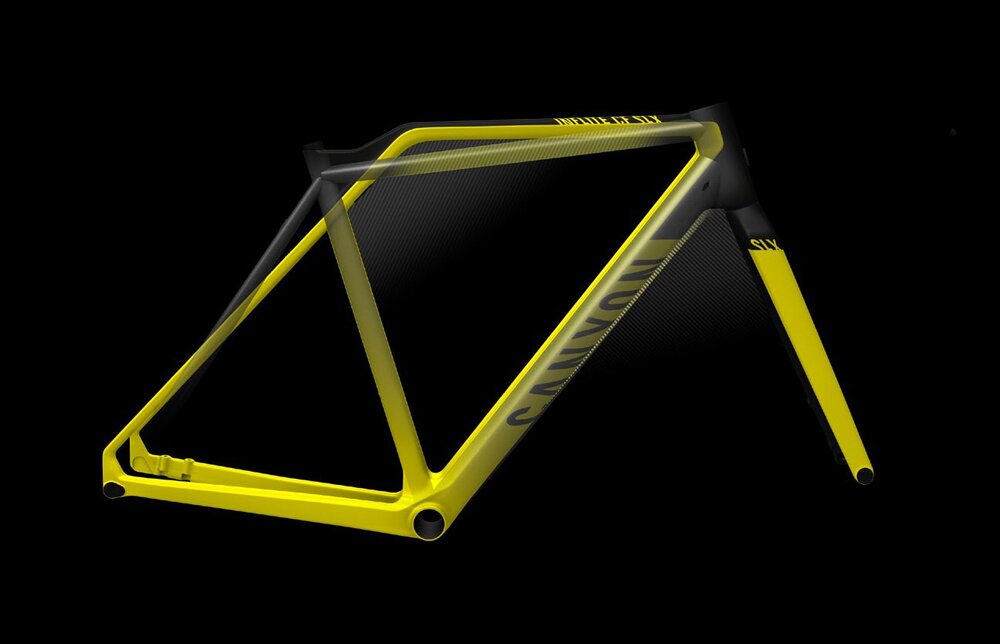
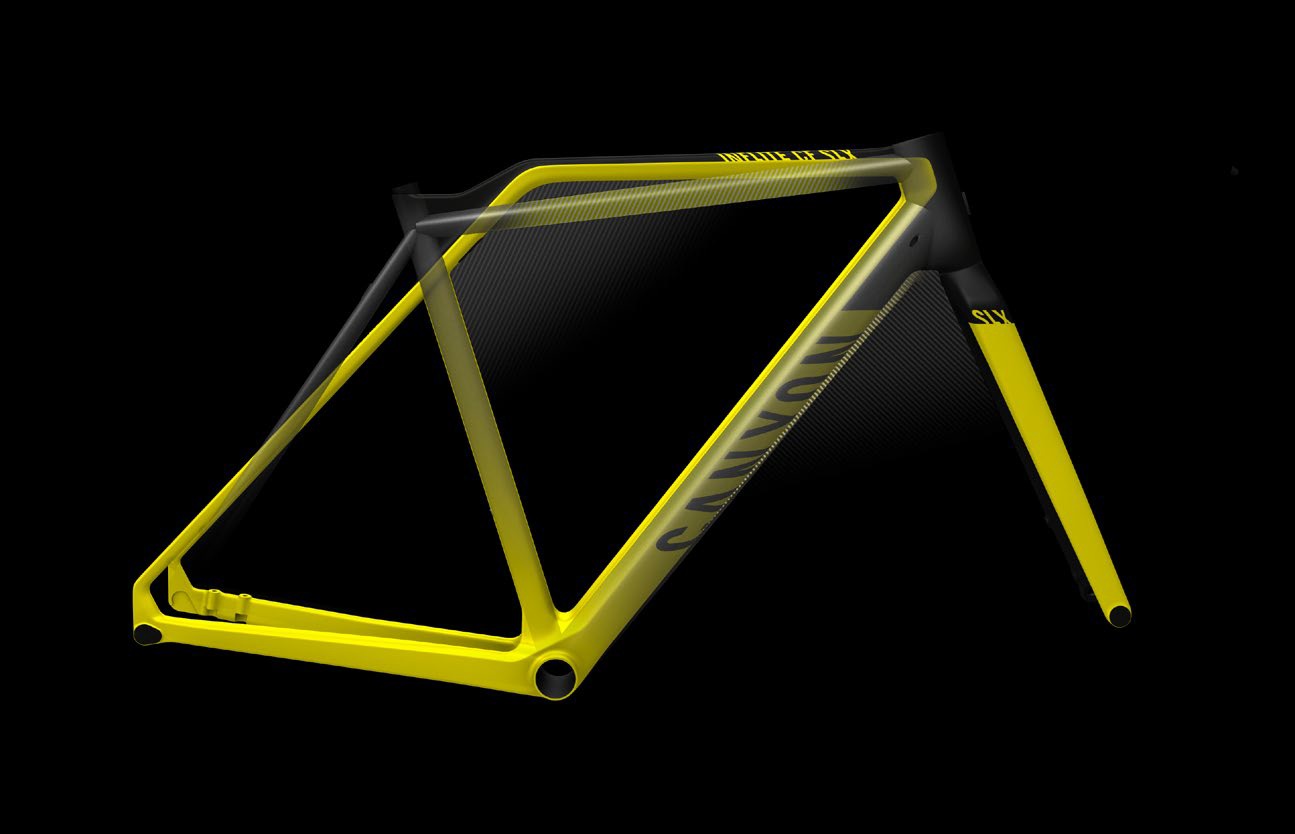
From its inception, the bike was unapologetically cyclocross-nerdy. Its signature top tube shape — the kink — was the most explicit expression of it. Invented to improve shouldering efficiency for more natural and faster running, the approach was provocatively new for the discipline — and for the eyes of the heavy-on-rules, traditional cyclocross scene. It was interesting for some, odd for others. But after UCI approval and a few races in the 2018 season, many agreed that the bike and its design were a game changer. The kink in the top tube allowed a technical contradiction: a larger frame triangle for better shouldering yet maximized seat post exposure resulting in a more flexing seat post. This allowed the rider to stay longer in the seated position, which is crucial for success in technical terrain and typical for riders like Mathieu van der Poel.
jpg
One hour in the red
“We didn’t stop there,” adds Lukas Schuchnigg, Senior Engineer at Canyon. “We really tried to think ultra-specific cyclocross. We spent hundreds of hours in the dirt and in test labs, considering how races unfold, the terrain, the racer’s behavior. We knew we would risk being perceived as positioning the bike super niche — or nerdy, if you want. But we did it anyway.”
Example: durability. The carbon frame wasn’t just reinforced at the conventional stress points like the bottom bracket or headset. Instead, the frame is fortified at the (usually thinner) center sections of the top tube, seat tube, and down tube. Why? Because crashes, falling, and stumbling are more the rule than the exception in cyclocross, and then riders become runners, stepping on you — or worse, your frame — risking damage.
Supported by the kink, the Inflite’s frame allowed another contradiction: the combination of agility, crucial for today’s “entertaining” parcours, and the bike’s stability under braking (not that Mathieu ever would) and off-camber load (translated: when you want to ride your line, but the terrain has different plans for you). Or, as Mathieu van der Poel puts it: “The handling of the bike is super predictable — that’s what I really like about it.”
jpg
Two pounds of mud
Despite the frame reinforcements, the bike is lightweight — and stays lightweight. On a muddy day, a cross bike can collect two pounds of mud on the frame, drivetrain, and tires. So, one objective was to make the frame as sleek as possible, with internal cable routing and ample clearance to avoid mud build-up, keeping the bike lighter and the rider out of the pit.
“The success of the bike is that it’s not adapted from road or gravel, but born from cyclocross,” Julian Biefang summarizes. Crucially, those fundamentals proved durable. Rather than chasing trends or announcing facelifts for marketing reasons, Canyon kept the bike as it was. Because it was — and is — state of the art. That allowed riders to carry familiarity season after season; they could develop deep intuition for the bike — key to success in cyclocross, where bike handling is everything.
Somehow, the Inflite’s success is not just a cyclocross story, but a broader one about platform integrity in a sport increasingly driven by novelty. In a landscape where performance claims are often fragmented by constant change, the Inflite’s multi-year run raises a provocative question: what if the most successful bike of the decade didn’t win because it kept evolving, but because it got it right from the start?
jpg
NOTES TO EDITORS
1. Photo usage: Please state any copyright given in the file name.
Mathieu van der Poel recorded his 51st World Cup victory at Hoogerheide on 25 January 2026. Coming into the second half of the 2017/18 season, van der Poel had 13 World Cup victories to his name (2014/15: 1; 2015/16: 4; 2016/17: 3; 2017/18 until 31 Dec: 5) before he switched to the Inflite CFR. From there he amassed a further 38 with Canyon over the following nine years.
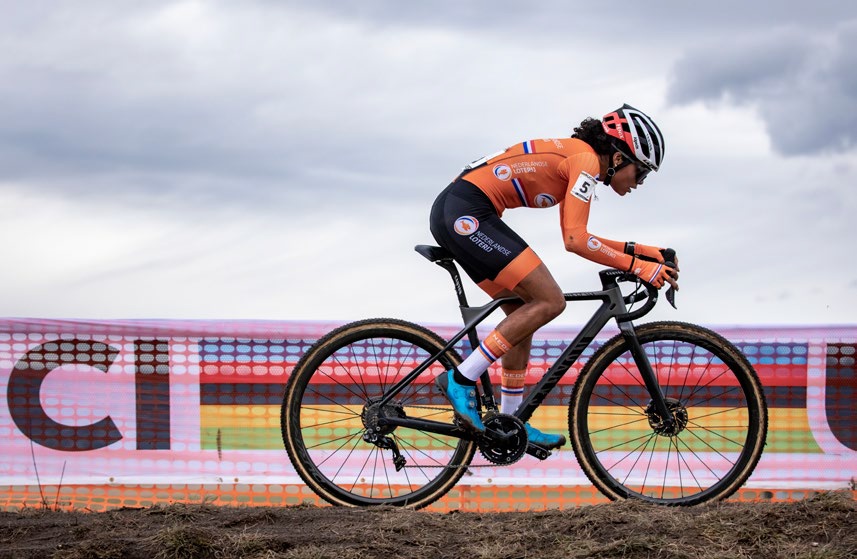
It's not only van der Poel who wins on the Inflite CFR though. Other notable victors include Ceylin del Carmen Alvarado (8 World Cup victories), Puck Pieterse (9 World Cup victories), Niels Vandeputte (1 victory) and Tibor del Grosso (U23 victories).
History was made in the mud of Hulst at the UCI Cyclo-cross World Championships. Beyond Mathieu van der Poel’s historic eighth title on the Inflite CFR, several other Canyon riders rounded out the ...
Mathieu van der Poel is now equal with the Greatest of All Time in cyclocross – at least in terms of World Championship titles. And for the majority of those wins, he’s not only been riding the Inf...